Wednesday, October 14, 2009

The Littlest President


I had this idea, a while ago, that the first four presidents--Founding Father presidents--could easily be compared to the Beatles. John Adams and Thomas Jefferson are obviously the Lennon-McCartney of the group; they do a lot of good work together, they love each other, fight a bunch, then make up. George Washington is George Harrison; quiet, underrated.

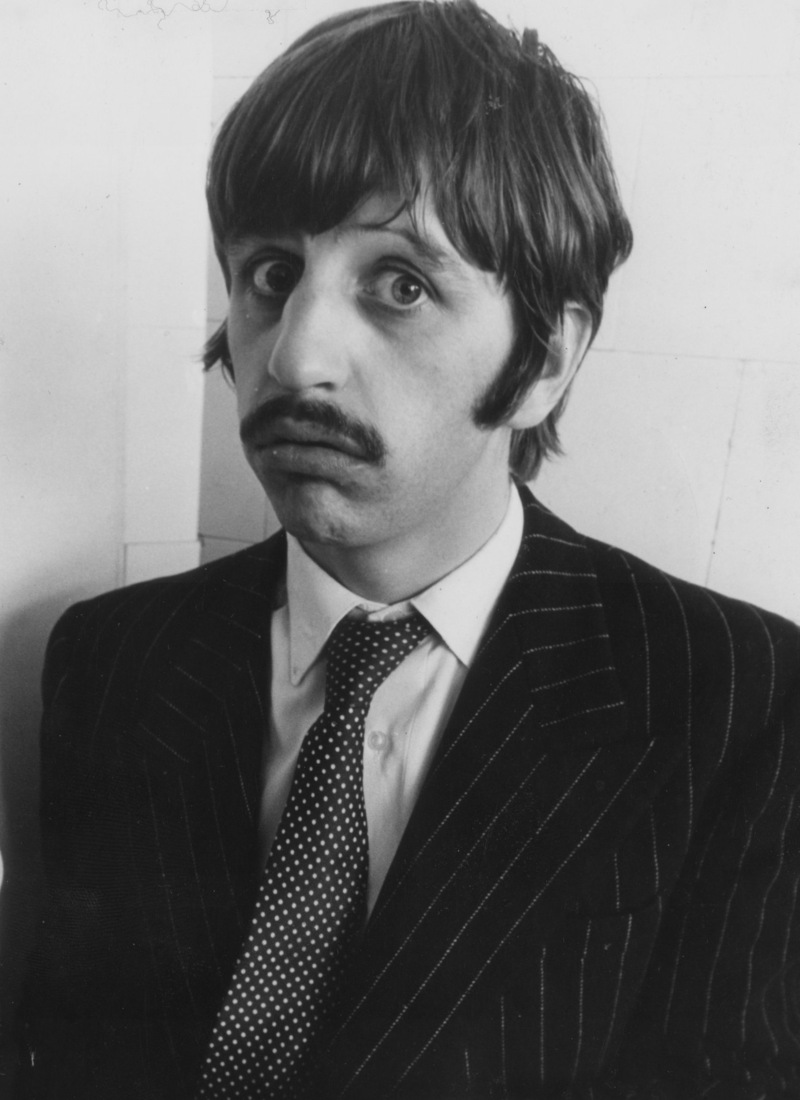
That, of course, means that James Madison is Ringo. Because he's short. And fourth.

This is unfair. Madison does some pretty incredible things both before he's president and later during his presidency. He writes a third of the Federalist Papers. He's the Father of the Bill of Rights. He's as insistent as Jefferson--maybe even more so--about the separation of church and state (and as Garry Wills points out, organized religion hasn't flourished nearly as well in any other industrialized country as it has in the US). He gets the country through its first war ever, and in doing so, sets it on its way to eventual world power.

Of course, to do so, he has to reverse his course on almost everything. But, as Wills points out pretty often, consistency isn't his strong point, and several times, one of Madison's faults will turn out to be his strong suit (and vice versa).

But, as Wills also points out, he's got the problem of following those other three guys. He's never going to crack the top ten. And even though Ringo wrote some decent songs ("Don't Pass Me By" comes to mind), he's always going to be overshadowed by John, Paul, and George (Harrison, not Washington).

Tuesday, October 6, 2009

Outgunned!

Everything I've written below about Jefferson and Monticello is done so much better, and with lovely art to boot, by Maria Kalman in her blog for the New York Times.

Friday, October 2, 2009

The Colonel and Monticello

It has occurred to me already, four months into this project, that writing a biography of someone is an act of love. You become attached to the person, reading his or her letters and diaries and journals, tracing steps across the continents. You start to think that you really know your subject, and certainly you do, more so than 99% of the rest of the populace. It's your job--your duty, even--to translate his or her life into modern-day language, to revivify them. That's a heavy thing to have to do. You might get a little defensive sometimes about the flaws of the person you love.

Or a lot defensive, in the case of Jefferson. Witness the man who led our tour of Monticello; if he told us his name at the beginning of the tour, I forgot it the moment another staff member addressed him as "The Colonel." This is where we met him, on the steps of Monticello:


I was very excited about the steps of Monticello--you see, one of the things I've always liked about Jefferson is his inventiveness--stands that let him read five books simultaneously, closet space in the high, formerly wasted upper space of the house, little lazy susans that allow food and wine to appear magically in the dining room. The ceiling of the front porch of Monticello is the first chance you get to experience this kind of genius:


It's a compass attached to the weathervane; Jefferson the agrarian scholar can step out on his porch during a storm and learn the direction of the wind without getting wet. Brilliant!

We skipped it without a mention, and went inside. Now, to be fair to the Colonel, he did point out Jefferson's days-of-the-week clock in the entry hall, and a few other gizmos, but this set a tone. In side the entry hall, the Colonel pointed out a mastodon tooth of Jefferson's as proof of his scientific curiosity, but did not mention my favorite Jefferson fact: that he told Lewis and Clark to keep an eye out for mastodons while they explored the Louisiana Purchase, as Jefferson was sure they still roamed out there somewhere.

No mention of this from the Colonel. We were doing a Great Lives of Great Men tour today.

And then, in the next room, it kicked into a higher gear. The Colonel had been discussing something or other--Martha Washington, I think, since we were in her receiving room--when, apropos of nothing:

"Now, this business between Mr. Jefferson and a slave of his is NOT scientifically proven, and even if it was true, it doesn't change A WORD of what he wrote in THAT DOCUMENT!" the Colonel yelled, and pointed to a copy of the Declaration of Independence on the wall.

Wait, what? Where did that come from? No one had mentioned Sally Hemmings at this point, and even if we had, it was the official position of the Thomas Jefferson Foundation--the people who own Monticello and the Colonel's employer--that Jefferson fathered at least one child with Sally.

The feeling in the room had shifted. When the Colonel asked for questions, one man raised his hands and asked why Jefferson had died bankrupt (quick answer: he loved spending money), something the Colonel had mentioned in his run-up to the explosion.

"I won't answer that here," he said. "Let's let the man remain solvent while we're under his roof."

Yep, we were definitely in the realm of hardcore subject love. The "Mr. Jefferson" cinched it for me; this guy had to be a graduate of the University of Virginia (ahem, sorry, "Mr. Jefferson's University") back in its all-male days. Nothing like seeing your idol, your model yanked down off his pedestal to make you defensive about him.

The Colonel gives a tour of Monticello that won't be available in a dozen years: the uncomplicated, brilliant genius of the Revolution. A guy who didn't fund the newspaper enemies of his own President (as TJ did while Washington's Secretary of State), a guy who didn't sleep with his slaves, and certainly not a guy who put his genius to work to avoid the more problematic aspects of owning other human beings. Those clever lazy susans I mentioned earlier? They let food and wine reach the table without requiring a single slave to appear in the room.

Sigh. It's been a difficult week for separating the man from his work (paging Roman Polanski and John Phillips). I'm ready to move on to James Madison, who's complicated for a whole other set of reasons.
Wednesday, September 16, 2009

We went to Monticello, part one

Oh, you mean the other Monticello. The one on the back of the nickel? The most famous private residence in America? The house that looks like a single story but is actually two?

Yeah, we went there. More on that later. But on our trip to Canada at the beginning of August, we ran into this:


Is there any other president you'd want to evoke in naming your restaurant? Richard Nixon's California Cuisine? James K. Polk Salad Bar? Jefferson is an epicure, among the million other things he also is, and so this actually makes a little sense. The man had a massive wine collection--big enough to write about, 200 years after the fact. I remember learning as a child that Jefferson had introduced the tomato to America, eating a bunch of them to prove that they weren't poisonous (they are related to nightshade, after all). So a restaurant isn't too far off the mark.

What's interesting about this Monticello is its menu, which seems to be a mostly creole/cajun palate, something that surprised me. Two possible connections, though: Jefferson did make the Louisiana Purchase, and Jefferson was a Southerner through and through. No matter how aristocratically we may think of him now, he viewed himself as a Virginia planter (although plantation owner is more accurate) before anything else. His home reflects that; more soon on it.

Monday, September 7, 2009

Lions and Tigers and Henry Clay, oh my!


I feel like we're stepping into the unknown. George Washington, Thomas Jefferson--sure, everyone knows those guys: patriots! statesmen! on money!

But James Madison seems like the end of the diving board--from this point, it's a long stretch to the next familiar president (Lincoln, although you might make a case for Jackson). And I feel, too, like we're about to head through a mysterious area of American history, that of post-Revolution to the Civil War. I know a little bit about this time period, but it's all leftovers from high school: the Missouri-Maine Compromise, the War of 1812, and, umm...umm...

One thing I had hoped this project might do was to create a sense of continuity to American history, a path from Washington to Obama that told a story about this country. Now that we're done with the exciting opening scenes, it's time to move into the ordinariness of everyday governing.

Towards that end, we're reading Garry Wills's James Madison. A short biography for a short president (oh, don't worry--that's only the first of many short jokes to come).

Tuesday, September 1, 2009

Hard at work, even on vacation.


The American Falls on the left, Horseshoe Falls on the right, Jefferson in between, as seen from the Canadian side. Librarians: it is against the rules to take library books out of the country, or is that just rental cars?

Sunday, August 30, 2009

"It was my understanding that Jefferson left the party a long time ago..."

That's a paraphrase of what former vice-president Dick Cheney (and the first VP to shoot a guy since Aaron Burr, TJ's veep) said about former Secretary of State Colin Powell, discussing how Cheney didn't think Powell was really a Republican anymore. But the same could easily be said about Thomas Jefferson, the first Republican president. Compare this list of facts to what you know about today's Republican party; Thomas Jefferson

--loved the French. Drank French wines.

--spent government money on art (Houdon's sculpture of Washington in the Virginia capitol building).

--was, among his many accomplishments, proudest of (it's one of the few things listed on his self-designed tombstone) his authorship of the Virginia Statute for Religious Freedom. In fact, he

--founded the University of Virginia so that schools could teach free of religious influence.

--was a big fan of science, and used government money to fund the Lewis and Clark expedition.

--used powers not necessarily reserved for the Executive branch in order to make the Louisiana Purchase, circumventing the Constitution to do so (although he did draft an amendment that would have made it OK, time was ticking).

Now, this list is a touch biased. Parties evolve (I'm grateful that the Democrats are a far cry from Andrew Jackson, too). But it's interesting to see how political parties--which come into existence for the Adams-Jefferson battle of 1796--have evolved away from their origins. Jefferson might have been the first president to campaign on a platform that changed when faced with the realities of the office, but he wasn't the last.